Lyme Disease Awareness
Sharing Stories, Creating Awareness and Providing Prevention Measures
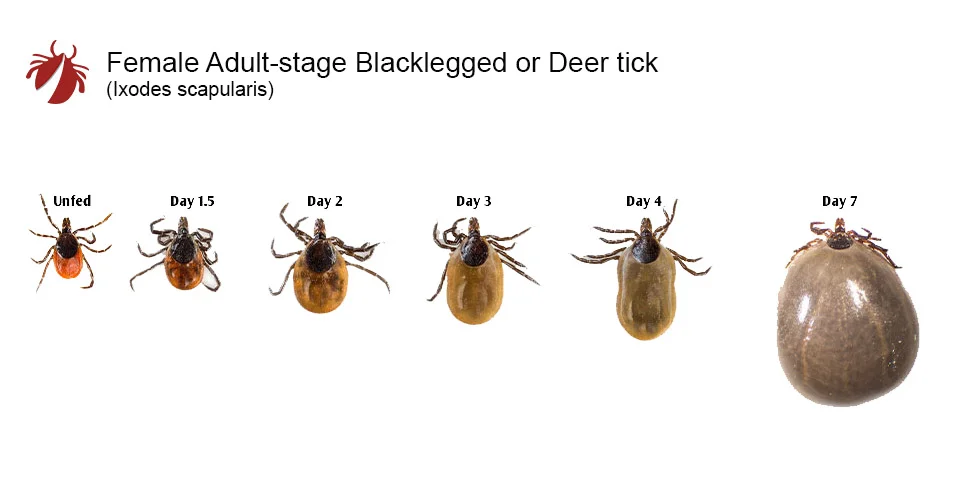
It's very hard to imagine that an insect this small can have such a devastating affect on the human body.
Please share this site with friends and family. Help spread the word...
My Personal Journey With Lyme Disease
Sept. 2025 - I was born and raised in the beautiful Adirondack mountains of upstate New York. Growing up here in the 60s, 70s and 80s was an amazing experience. Whether hunting, fishing, camping, hiking, boating, you name it, we were always outdoors. Ticks were never a fear or concern back then, but the state and local governments would also spray insecticides from planes and there were tanker trucks that would travel through our neighborhoods emitting blue clouds of "smoke".
This must have helped a lot because my first recollection of seeing a tick wasn't until I was in my late 30s or early 40s. But the environmentalists had already gotten involved and ended the insect control measures claiming it was harming the environment. Since then, there has been an explosion in the tick population.
Over the years, I have taken various precautions to reduce my family's exposure. (We actually lost a dog about 15 years ago due to Lyme.) So now we treat the yard every spring and fall with granulated insecticide. Our dogs wore flea and tick collars, and more recently, they now get monthly doses of expensive meds prescribed by a vet for flea and tick prevention. While this has helped, it's not a guarantee. Last summer, I felt something crawling on my arm. I looked down and saw it was a tick. It was early morning, and I was in my kitchen, in my house, trying to cook breakfast. I hadn't even been outside yet. They are everywhere...
Over time, my normal "old age" aches and pains began to get worse. Much worse. By June of 2025, it became excruciating just to stand up. My energy levels dropped to where I didn't want to do anything. I had a constant nagging headache and began running a fever. So I decided I needed to see my doctor and they did blood work. I had asked to include testing for Lyme. I was diagnosed with both influenza B and Covid together as well as testing positive for Lyme, so I was put on antibiotics. I spent the next 3 days in bed with a rash that covered about 70% of my body, cold sweats, hallucinations and severe pain. Once I got over that, or at least well enough to move around, I found the joint and muscle pain still hadn't eased up any. My headache still persisted and my right eye was starting to droop a little. I chalked that up to just not being entirely over it yet.
This continued a few more days and then I began having some problems speaking. My speech was slurred but cleared up after a few minutes. It only happened briefly but then it occurred a few more times over the next day or so and progressively had gotten worse. Suddenly I had no control of my mouth and couldn't pronounce any words. Fearing a stroke, I went to the local ER. It was determined that I did not have a stroke, but my heart rate was very low at about 35-40 BPM and they decided I needed more specialized care. So I was transferred by ambulance to the ER in Plattsburgh about an hour away. This is when things got scary...
The ER did a bunch of tests and ran another ECG. They confirmed my heart wasn't working as it should and told me I not only had Lyme disease, but also Lyme Carditis which is a serious condition that causes "Heart Block". Heart block is a condition where the electrical signals in the heart are disrupted, affecting the heartbeat. It occurs when the signals that control the heart's rhythm are slowed or blocked as they travel from the upper chambers (atria) to the lower chambers (ventricles).
There are 3 different types of heart block:
First-degree heart block: The electrical signals are slowed but still reach the ventricles.
Second-degree heart block: Some signals do not reach the ventricles, causing missed heartbeats.
Third-degree heart block: No signals reach the ventricles, leading to a complete blockage, which is the most serious type. Symptoms may include fatigue, dizziness, and fainting, and treatment options vary based on the severity of the block. See more here: Cleveland Clinic
It was determined that I was Third-degree, and I was moved into the cardiac care unit. I was put on IV antibiotics and monitored closely 24/7 because there was the risk of total heart failure. After 3 or 4 days, some of this is still a blur to me, I was moved upstairs but still being continuously monitored. It was also determined that the Lyme caused my facial palsy and all the other symptoms I had. I was seen by multiple doctors including Infectious Disease and Cardiologists. Because I never saw the tick that bit me, and all the symptoms I had, it's assumed I was bitten months ago. Possibly as much as a year or more. Lyme disease also has three stages. See more info here from the Mayo Clinic
After nearly 3 1/2 weeks of constant monitoring at the hospital, daily IV antibiotic injections, dozens of EKGs, a stress test, numerous blood samples / tests, an MRI, a nuclear bone density test, a few CT scans, X-rays and ultrasounds, none of my symptoms improved, especially my heart. It was hoped that with the IV antibiotics my heart function would return to normal. It did not. So, my options were to stay 2 more weeks, or to have a pacemaker put in. Not wanting to spend another minute in the hospital, I opted for the pacemaker. The idea being that the pacemaker could possibly be temporary and if my heart bounced back to normal, it could be removed. The surgery was done and I was released the next day. Oral antibiotics were ordered for two more additional weeks.
A couple weeks after the procedure, I had a follow up with the cariologists. The pacemaker was being used 99.6% of the time. So, no improvement on the Heart block. I continue struggling with shortness of breath, the facial palsy which affects my eyes/double vision, speech and swallowing. When brushing my teeth I can't even gargle or spit. Eating and drinking is a real challenge, and the joint pain was still impacting everything I did. On top of all this, my short-term memory had been affected and obviously all this can't help but cause depression. This has been very challenging and is having a negative impact on my daily life as well as my family's. Work was out of the question, so we had to live off our limited savings.
This site was created in the hopes of further spreading the knowledge about Lyme and its vast complications. I'm sharing my struggles here with the hope of helping others to prepare and avoid what I am going through.
Remember, all this was caused by a bite from a bug as small as a mustard seed.
Signs & Symptoms
Lyme disease is an underreported, under-researched, and often debilitating disease transmitted by spirochete bacteria. The spiral-shaped bacteria, Borrelia burgdorferi, are transmitted by blacklegged deer ticks. Lyme’s wide range of symptoms mimic those of many other ailments, making it difficult to diagnose (1, 2). The blacklegged ticks can also transmit other disease-causing bacteria, viruses, and parasites. These are known as coinfections (1). These ticks that transmit Lyme are increasing their geographical spread. As of 2016, they were found in about half the counties in 43 of 50 states in the United States (3).
Lyme is the fifth most reported of notifiable diseases in the United States, with an estimated 329,000 new cases found annually (4). But in some states, estimates suggest that Lyme disease is profoundly underreported (4). Some studies estimate that there are as many as 1 million cases of Lyme in the United States every year (5). Most people with Lyme who are treated right away with three weeks of antibiotics have a good prognosis. But if you’re not treated for weeks, months, or even years after infection, Lyme becomes more difficult to treat. Within days of the bite, the bacteria can move to your central nervous system, muscles and joints, eyes, and heart (6, 7). Lyme is sometimes divided into three categories: acute, early disseminated, and late disseminated. But the progression of the disease can vary by individual, and not all people go through each stage (8). Every individual reacts to the Lyme bacteria differently. You may have some or all of these symptoms. Your symptoms may also vary in severity. Lyme is a multi-system disease.
Rashes
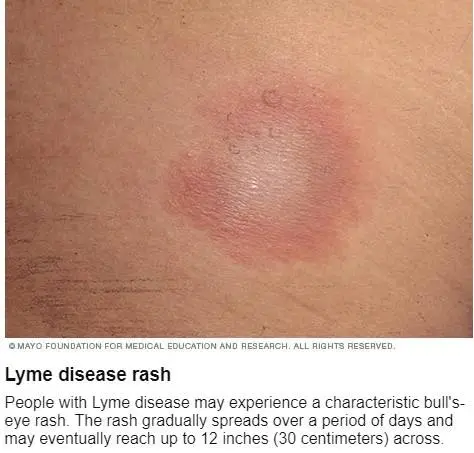
The signature rash of a Lyme tick bite looks like a solid red oval or a bull’s-eye. It can appear anywhere on your body, and sometimes it may not appear as a bull's-eye. The rash usually doesn’t itch but can. The rash is a sign that the infection is spreading within your skin tissues. The rash expands and then resolves over time, even if you’re not treated. Thirty percent or more of people with Lyme disease don’t remember having the rash (9). Even fewer people remember a tick attachment. Estimates range from 20 to 50 percent (10). The ticks in the nymph stage are the size of poppy seeds, and their bites are easy to miss. The initial red rash usually appears at the site of the bite within 3 to 30 days (11). Similar but smaller rashes can appear three to five weeks later, as the bacteria spread through tissues (12). Sometimes the rash is just a red blotch (1, 13). The rash can also take other forms, including a raised rash or blisters (14).
If you have a rash, it’s important to see your doctor to get treated promptly.
Fatigue
Whether or not you see the tick bite or the classic Lyme rash, your early symptoms are likely to be flu-like. Symptoms are often cyclical, waxing and waning every few weeks (12). Tiredness, exhaustion, and lack of energy are the most frequent symptoms. The Lyme fatigue can seem different from regular tiredness, where you can point to activity as a cause. This fatigue seems to take over your body and can be severe. You may find yourself needing a nap during the day or needing to sleep one or more hours longer than usual. In one study, about 84 percent of children with Lyme reported fatigue (8). In a 2013 study of adults with Lyme, 76 percent reported fatigue (15). Sometimes Lyme-related fatigue is misdiagnosed as chronic fatigue syndrome, fibromyalgia, or depression (8). In some Lyme cases, fatigue can be disabling (16).
Muscles and Joints
Joint pain and stiffness, often intermittent, are early Lyme symptoms. Your joints may be inflamed, warm to the touch, painful, and swollen. You may have stiffness and limited range of motion in some joints (1). Pain may move around. Sometimes your knees may hurt, whereas other times it’s your neck or your heels. You may also have bursitis (16). Bursae are the thin cushions between bone and surrounding tissue. The pain may be severe, and it may be transitory. More than one joint may be affected. Most often the large joints are involved (12). People often attribute joint problems to age, genetics, or sports. Lyme should be added to that list, as these statistics indicate:
- One study estimates that 80 percent of people with untreated Lyme have muscle and joint symptoms (17).
- Fifty percent of people with untreated Lyme have intermittent episodes of arthritis (17).
- Two-thirds of people have their first episode of joint pain within six months of the infection (18).
- Use of anti-inflammatory drugs may mask the actual number of people with joint swelling (19).
Flu-like Symptoms
Other common flu-like symptoms are headaches, dizziness, fever, muscle pain, and malaise. About 50 percent of people with Lyme disease have flu-like symptoms within a week of their infection. Your symptoms may be low-level, and you may not think of Lyme as a cause. For example, when fever occurs, it’s usually low-grade. In fact, it can be difficult to distinguish Lyme flu symptoms from a common flu or viral infection. But, unlike a viral flu, for some people the Lyme flu-like symptoms come and go. Here are a few statistics from different studies of Lyme patients:
- Seventy-eight percent of children in one study reported headaches (8).
- Forty-eight percent of adults with Lyme in one study reported headaches (20).
- Fifty-one percent of children with Lyme reported dizziness (8).
- In a 2013 study of adults with Lyme, 30 percent experienced dizziness (15).
- Thirty-nine percent of children with Lyme reported fevers or sweats (8).
- Among adults with Lyme, 60 percent reported fever in a 2013 study (15).
- Forty-three percent of children with Lyme reported neck pain (8).
- A smaller number of children with Lyme reported sore throats (8).
Sleep Issues
Sleep disturbances in Lyme are common. Joint pain may wake you up at night. Your body temperature may fluctuate, and night sweats or chills can wake you. Your face and head may feel flushed. Here are some of the statistics from studies:
Cognitive Problems
There are many kinds and degrees of cognitive disturbances, and they can be scary. You may notice that you have difficulty concentrating in school or at work. Your memory may have lapses that weren’t there before. You may have to reach to remember a familiar name. You may feel as though you’re processing information more slowly. Sometimes when driving or taking public transportation to a familiar place, you may forget how to get there. Or you may be confused about where you are or why you’re there. You might get to a store to shop, but entirely forget what it was that you were supposed to look for. You might at first attribute this to stress or age, but the decline in capabilities may worry you.
Here are some statistics:
Vision Problems & Light Sensitivity
Bright indoor light may feel uncomfortable or even blinding. Light sensitivity is bad enough for some people to need sunglasses indoors, in addition to wearing sunglasses outdoors in normal light.
Light sensitivity was found in 16 percent of adults with early Lyme (15).
In the same study, 13 percent reported blurry vision.
Neurological Symptoms
Neurological symptoms can be subtle and sometimes specific. In general, you may feel unsure of your balance or less coordinated in your movements. Walking down a slight incline on your driveway might take an effort that it never did before. You might trip and fall more than once, although this never happened to you before.
Some Lyme effects are very specific. For example, the Lyme bacteria may affect one or more of your cranial nerves. These are the 12 pairs of nerves that come from your brain to your head and neck area. If the bacteria invade the facial nerve (the seventh cranial nerve), you can develop muscle weakness or paralysis on one or both sides of your face. This palsy is sometimes mistakenly called Bell’s palsy. Lyme disease is one of the few illnesses that cause palsies on both sides of the face. Or you may have numbness and tingling on your face.
Other affected cranial nerves can cause loss of taste and smell. A Centers for Disease Control and Prevention (CDC) study of 248,074 reported Lyme disease cases nationwide from 1992 to 2006 found that 12 percent of Lyme patients had cranial nerve symptoms (9).
As the Lyme bacteria spread through the nervous system, they can inflame the tissues where the brain and spinal cord meet (the meninges).
Some of the common symptoms of Lyme meningitis are neck pain or stiffness, headache, and light sensitivity. Encephalopathy, which alters your mental state, is less common. These neurological symptoms occur in about 10 percent of adult individuals with untreated Lyme disease (18).
Skin Problems
Skin symptoms appear early in Lyme (21). You may have unexplained skin rashes or large bruises without usual cause. Skin outbreaks may be itchy or unsightly. They could also be more serious, such as B cell lymphoma (21). Other skin ailments associated with Lyme are:
- morphea, or discolored patches of skin (21)
- lichen sclerosus, or white patches of thin skin (21)
- parapsoriasis, a precursor to skin lymphoma
In Europe, some of the skin diseases that result from Lyme transmitted by a different Borrelia species are:
Severe Heart Problems
Lyme bacteria can invade your heart tissue, a condition called Lyme carditis. Carditis can range from mild to severe. The bacterial interference in your heart can cause chest pains, light-headedness, shortness of breath, or heart palpitations (23). The inflammation caused by the infection blocks the transmission of electrical signals from one chamber of the heart to the other, so the heart beats irregularly. This is known as heart block. Lyme can also affect the heart muscle itself.
How common is Lyme carditis? Here are some statistics:
- The CDC reports that only 1 percent of reported Lyme cases involve carditis (23).
- Other studies report that 4 to 10 percent of Lyme patients (or more) have carditis (24, 25). However, these figures may include a broader definition of carditis.
- Children can also have Lyme carditis (24).
With treatment, most people will recover from an episode of Lyme carditis. However, it has caused occasional deaths. The CDC reported three sudden Lyme carditis deaths from 2012–2013 (26). Also, in some cases if the heart block cannot be corrected, a pacemaker may be needed.
Mood Swings, Anxiety & Depression
Lyme can affect your moods. You may be more irritable, anxious, or depressed. Twenty-one percent of early Lyme patients reported irritability as a symptom. Ten percent of Lyme patients in the same study reported anxiety (15).
Pain and Other Symptoms
Some people with Lyme may have sharp rib and chest pains that send them to the emergency room, suspecting a heart problem (27). When no problem is found, after the usual testing, the ER diagnosis is noted as an unidentified “musculoskeletal” cause. You can also have strange sensations like skin tingling or crawling, or numbness or itchiness (27). Other symptoms have to do with cranial nerves.
- Ear-ringing (tinnitus). Tinnitus can be a nuisance, especially at bedtime when it seems to get louder as you’re trying to fall asleep. About 10 percent of people with Lyme experience this (15).
- Hearing loss. One study reported that 15 percent of Lyme patients experienced loss of hearing (28).
- Jaw pain or toothaches that are not related to actual tooth decay or infection.
Children and Lyme
Children are the largest population of Lyme patients. The CDC study of reported Lyme cases from 1992–2006 found that the incidence of new cases was highest among 5–14-year-olds (9).
About one quarter of reported Lyme cases in the United States involve children under 14 years old (29).
Children can have all the signs and symptoms of Lyme that adults have, but they may have trouble telling you exactly what they feel or where it hurts. You may notice a decline in school performance, or your child’s mood swings may become problematic. Your child’s social and speech skills or motor coordination may regress. Or your child may lose their appetite.
Children are more likely than adults to have arthritis as an initial symptom (25). In a 2012 Nova Scotian study of children with Lyme, 65 percent developed Lyme arthritis (30). Knees are the most commonly affected joint.
Prepare & Prevent
The best way to prevent Lyme disease is to avoid tick bites when you are outdoors. Most ticks attach themselves to your lower legs and feet as you walk or work in grassy, wooded areas or overgrown fields. After a tick attaches to your body, it often crawls upward to find a spot to burrow into your skin. If you're in or plan to be in an area where ticks are likely to live, follow these tips to protect yourself. Use tick repellents!
- Spray your outdoor clothing, shoes, tent and other camping gear with a repellent that has 0.5% permethrin. Some gear and clothing may be pre-treated with permethrin.
- Use an insect repellent registered with the Environmental Protection Agency on any exposed skin, except your face. These include repellents that contain DEET, picaridin, IR3535, oil of lemon eucalyptus (OLE), para-menthane-diol (PMD) or 2-undecanone.
- Do not use products with OLE or PMD on children under age 3.
Dress for protection
- Wear light-colored clothing that makes it easier for you or others to see ticks on your clothing.
- Avoid open-toed shoes or sandals.
- Wear long-sleeved shirts tucked into your pants.
- Wear long pants tucked into your socks.
Check for ticks
- Shower as soon as possible to wash off any loose ticks. Check for ticks that may have burrowed.
- Use a mirror to check your body well. Pay attention to your underarms, hair and hairline. Also check your ears, waist, and the area between your legs, behind your knees, and inside your bellybutton.
- Check your gear. Before you wash your outdoor clothes, put them in the dryer on hot for at least 10 minutes to kill ticks.
- Do a daily inspection for ticks on any pets that spend time outdoors.
- Stay on clear paths as much as possible in wooded and grassy areas.
Remember: If you have any of the above-mentioned symptoms, ask your doctor to include testing for Lyme disease as part of your assessment. This currently isn't common practice and oftentimes why the disease is mis-diagnosed or undiagnosed. Only treating some of the symptoms without knowing the root cause allows the disease to progress further.
Lyme disease - Symptoms and causes - Mayo Clinic
Share Your Story About Lyme

Articles & News - Searching for the truth...
Bioweapons? A new law requires a review of military archives to determine whether Cold War tick weaponization contributed to today’s epidemic of tick-borne diseases.
Read More
A newly mandated federal inquiry into Lyme disease surveillance, diagnostic practices, and patient outcomes.
Read More

Please Consider a Donation

$25
Contact
- Crown Point, New York, NY, United States
Works Cited
https://academic.oup.com/cid/article/31/2/533/297971/Lyme-Disease Tick Infestations: Causes, Signs, and Prevention
https://academic.oup.com/cid/article/31/2/533/297971/Lyme-Disease
http://journals.plos.org/plospathogens/article?id=10.1371/journal.ppat.1003796
https://www.healthline.com/health/lyme-disease
http://journal.frontiersin.org/article/10.3389/fcimb.2015.00027/full
https://www.ncbi.nlm.nih.gov/pmc/articles/PMC3520031/
https://www.healthline.com/health/erythema-migrans
https://www.cdc.gov/mmwr/pdf/ss/ss5710.pdf
http://www.ilads.org/lyme/lyme-quickfacts.php
https://www.cdc.gov/lyme/signs_symptoms/index.html
https://www.ncbi.nlm.nih.gov/pubmed/11982305%20
https://www.ncbi.nlm.nih.gov/pmc/articles/PMC4248499/
https://www.ncbi.nlm.nih.gov/pubmed/11982305
https://www.ncbi.nlm.nih.gov/pmc/articles/PMC3520031/
https://www.ncbi.nlm.nih.gov/pmc/articles/PMC3548099/
https://www.hindawi.com/journals/ipid/2010/876450/
https://www.healthline.com/symptom/bursitis
http://www.lymenet.org/BurrGuide200810.pdf
https://www.uptodate.com/contents/lyme-disease-symptoms-and-diagnosis-beyond-the-basics
http://emedicine.medscape.com/article/330178-clinical%20
http://www.ilads.org/lyme/lyme-tips.php%20
http://www.nejm.org/doi/full/10.1056/NEJM199011223232102#t=abstract
https://www.ncbi.nlm.nih.gov/pmc/articles/PMC3548099/
https://www.healthline.com/symptom/night-sweats
https://www.healthline.com/symptom/unable-to-concentrate
http://www.jpands.org/vol14no3/maloney.pdf
https://www.cdc.gov/mmwr/pdf/ss/ss5710.pdf
https://www.healthline.com/health/meningitis
https://www.healthline.com/health/hepatic-encephalopathy
https://www.cdc.gov/mmwr/pdf/ss/ss5710.pdf
http://emedicine.medscape.com/article/330178-clinical
https://www.ncbi.nlm.nih.gov/pmc/articles/PMC3667275/
https://www.healthline.com/health/non-hodgkins-lymphoma
https://www.healthline.com/health/morphea
https://www.healthline.com/health/lichen-sclerosus
https://www.ncbi.nlm.nih.gov/pmc/articles/PMC4248499/
https://www.cdc.gov/lyme/signs_symptoms/lymecarditis.html
https://www.cdc.gov/lyme/resources/Fish2008-508.pdf
http://www.ijidonline.com/article/S1201-9712(12)01267-2/fulltext
https://www.cdc.gov/mmwr/pdf/wk/mm6249.pdf
https://www.healthline.com/health/anxiety-symptoms
https://www.healthline.com/symptom/chest-pain
http://www.medical.theclinics.com/article/S0025-7125(03)00090-7/abstract%20
https://www.healthline.com/symptom/ringing-in-ears
http://www.nejm.org/doi/full/10.1056/NEJM199011223232102#t=articleTop
https://www.cdc.gov/mmwr/pdf/ss/ss5710.pdf
http://www.sciencedirect.com/science/article/pii/S0891552015000252
https://www.ncbi.nlm.nih.gov/pmc/articles/PMC4614091/
http://www.ijidonline.com/article/S1201-9712(12)01267-2/fulltext#sec0040
https://www.mayoclinic.org/diseases-conditions/lyme-disease/symptoms-causes/syc-20374651